Food Answers Part 2

Pesticides

Before World War 2 most farming was organic. It wasn’t until after the war that farming became more industrialized utilizing billions of pounds of pesticides, chemical fertilizers, and animal drugs (OCA).

Organic pesticides are derived from plant, animal, and mineral sources. Though, not all organic pesticides are safe. Nicotine, copper compounds, tetracycline and streptomycin, are examples of not so safe organic pesticides. Though, some studies have shown no side effects- there hasn’t been much research on how harmful they can be. Organic pesticides have only been regulated for the past 8 years, so there is lots missing information. However, synthetic pesticides come from petroleum or other chemical sources which can have serious side effects. They are known to cause major health problems. They also remain toxic in the environment for months and even years. Which is leading to double exposure.

DDT was used in the 60’s and was banned in the early 70’s, yet it still can be detected in the environment and in our blood today. DDT has been linked to severe health problems and was even used in most households. More and more conventional pesticides are being linked to brain damage, ADD/ADHD, cancer, and other major health concerns. Children are at more of a risk since their bodies can’t break down the chemicals as fast as adults, their metabolic rates are more rapid, the pesticides pass through critical developmental stages, they absorb up to 10 times more than adults, they are lower to the ground and inhale more toxic fumes, and they tend to play more in the contaminated dirt (EPA, OCA).

Once a synthetic pesticide has been sprayed, it can leach into the surface water and even the air. This can pollute well water, ground water, and even lakes and rivers. Fish and birds are especially at risk for becoming contaminated with the pesticide. By eating the contaminated animal, you and other creatures are consuming more of the pesticide doubling your exposure levels. The EPA now considers 60% of all herbicides, 90% of all fungicides, and 30% of all insecticides to be potentially carcinogenic or able to cause cancer.

EWG research has found that people who eat the 12 most contaminated fruits and vegetables (Peaches, Apples, Sweet bell peppers, Celery, Nectarines, Strawberries, Cherries, Lettuce, Grapes (imported), Blueberries Spinach, Potatoes) an average of 10 pesticides a day. Those who eat the 15 least contaminated conventionally-grown fruits and vegetables (Avocados, Corn, Onions, Sweet Potatoes, Cauliflower, Brussels Sprouts, Sweet Peas, Honey Dew, Eggplant, Watermelon, Grape Fruit, Pineapples, Mango, Kiwi, Cabbage) ingest fewer than 2 pesticides daily. The EPA as well as the USDA Pesticide Data Program, Marketplace Surveillance Program of the California Department of Pesticide Regulation, and private tests by the Consumers Union have done pesticide residue studies with very similar results. The EPA even goes into detail about each pesticide detected in the food products.

Scientists and government agencies do not know what levels of pesticide exposure can endanger the health of adults, let alone the effects on children. We do know that children break down chemicals differently and are more at risk for toxic exposure. So when you hear the argument that only a small percent of chemicals was on the produce, you can’t take that for true value since we don’t know what is harmful.

The EWG had been doing a study for the past 9 years on the 49 most popular fruits and vegetables. They tested each food at least 100 times and listed them in order of the most pesticide residue detected after washing/peeling. They in no way mean for you to stop eating the fruit or vegetable if you cannot afford organic. They also do not say that any fruit or vegetable is healthier or more nutritious. The Dirty Dozen was not built on a complex assessment of pesticide risks, but reflects the chemical load. The EWG said, “This approach best captures the uncertainties of the risks of pesticide exposure and gives shoppers confidence that when they follow the guide they are buying foods with consistently lower overall levels of pesticide contamination.”

A study released this month by the Environmental Health Perspectives suggests that more than one-quarter of the food children eat contain pesticides. Researchers found 14 varieties of pesticides in the fruits, vegetables, and juices they tested. The FDA has found 16 pesticides in 8 industry leading baby foods, including 3 carcinogens (OCA). But even before birth babies are being exposed. Scientist have detected 201 known and suspected carcinogens in cord blood (EWG). The US Department of Health and Human Services said organophosphate pesticides are now found in the blood of 95% of Americans tested. OPs kill by attacking the nervous systems of insect pests. Ops are linked to hyperactivity, behavior disorders, learning disabilities, developmental delays, motor disfunction, obesity, and cancer.

The EWG says that 4 out of 10 Americans will be diagnosed with cancer in their lifetimes and 2 out of 10 will die of it. The scary part is a report published in the Journal of Clinical Oncology predicts patients in need of radiation therapy will increase by 22 percent in ten years. But the number of radiation oncologists is only expected to increase 2 percent. So if we keep eating conventional foods and continue to support conventional household and personal care products there may not be enough Dr.’s to treat everyone.

Other Scary Stuff About Conventional Foods

GMOs (genetically modified organisms) make up 75% of conventionally processed foods (Non-GMO Project). GMOs are organisms which the DNA have been altered to something that doesn’t occur naturally. An example would be to inject vegetable DNA with a pesticide protein, which will eventually develop into a plant that would be used to grow GM crops. By changing the DNA, the whole molecular structure is being altered and we do not truly know what that is doing to the nutrition value of the food. The FDA does not require labeling, so you can’t tell if you are purchasing GMOs unless you buy certified organic. And because of cross contamination, very few products in the U.S. are completely free of GMOs- even if they are organic.

The Grist reported that Monsanto’s “Roundup Ready” GM seeds (mainly used for soy, cotton, corn, canola, and sugar beets) are having major issues with killing superweeds. Monsanto is paying farmers that have used Roundup Ready $6 per acre if they use at least 2 other herbicides on their GM crops. Roundup is made with glyphosate, the most commonly used herbicide. Weeds have built up resistance due to the overuse. Now the crops are having to be doused with even more chemicals doing more harm to the environment and humans.

The American Academy of Environmental Medicine reported that multiple GMO animal testing studies have shown significant immune dysregulation, including asthma, allergy, inflammation, altered structure and function of the liver, as well as cellular changes that could lead to accelerated aging. Changes in the kidney, pancreas and spleen have also been documented from GMO food.

Irradiation is a common procedure (which is deemed safe by the FDA) that nukes meat, fruits, and veggies with radioactive materials that kill bacteria and prolong shelf life. Irradiating began in 1916 by testing on a strawberry. Little progress was made until the “Atoms for Peace Program” began in 1953. The public began paying attention to nuclear power instead of nuclear weapons. Wheat Flour was one of the first foods to become regulated irradiated. White potatoes, spices, herbs, herb teas, pork, fruits and vegetables, poultry, beef, refrigerated or frozen raw beef, pork, lamb, and poultry, eggs, seeds, imported fruits and vegetables, and meat purchased by the Nation School Lunch Program (OCA) followed approval.

There are 2 types of irradiation, e-beam and nuclear. E-beam uses an electron gun to send high speed electrons into a food (OCA). The electrons damage the DNA of the food as well as bacteria (good and bad) which created free radicals and new chemicals. Nuclear irradiation uses nuclear materials that emit high speed gamma rays. E-beam combines gamma rays and x-ray radiation.

Products that have been irradiated must be labeled, but it can be tricky to find the wording or radura. You might be able to see the wording written in tiny text somewhere on the package or the radura seal. Some butchers might have it displayed on the counter. But, multiple ingredient products that not all were irradiated will not have the wording. Nor will spices, herbs, herbal teas, sprouts, irradiated foods found in restaurants, fast food, delis, salad bars, hospitals, schools, nursing homes, airlines, or take out counters. The FDA has tried several times to stop the irradiation labeling. So you might see some terms like, “electronically pasteurized” or “cold pasteurized.”

Sewer sludge has become the mainstream fertilizer. Sewer sludge is the “cleaned” sewer remains which contains a toxic blend of heavy metals, synthetic organic compounds, pathogens, flame retardants, toxic teflon residues, pharmaceuticals, and radioactive contaminants which come from industrial plants, hospital waste, agricultural run-off, and other known and unknown sources. The EPA only requires treatment plants to kill off any fecal coliforms in the sludge and ensure that nine heavy metals (arsenic, cadmium, chromium, copper, lead, mercury, molybdenum, selenium and zinc) are not present in unacceptable levels.

Food grown in sewer sludge doesn’t have to be labeled. So you will not know (unless you buy organic) that what you are eating was grown in sludge. You should especially avoid foods from China due to their growing black market sewer oil trade. The Grist reports that Chinese restaurants are dumping oil and black marketers are fishing out the oil for reuse. Dongping, professor of food science engineering at Wuhan Polytechnic University, found that 10% of meals cooked across China use oil that has been reprocessed from discarded kitchen waste.

Food Answers Part 1

Certified Organic Food

“Certified Organic” means the food is grown without synthetic pesticides and fertilizers that aren’t approved by the USDA. The organic food cannot be treated with any chemicals, preservatives, colorings, or artificial additives post-harvest. To be labeled “organic,” the food must be produced free of sewage sludge, bioengineering, and ionizing radiation.

If a farmer makes more than $5,000 off of their organic food or livestock they must be certified by a third party USDA accredited agent. To obtain certification the farmer must keep a detailed record of practices and materials used, pass farm inspections, and pass periodic residue testing. The soil must be free of pesticides and fertilizers for 3 years before gaining certification. If a farmer makes less than $5,000 they do not have to be certified, but must follow the same steps. An $11,000 fine is issued on any person who knowingly sells or labels as organic when the product does not follow the NOP regulations.

Labels

The USDA says products labeled as “100% organic” can only contain organically produced ingredients other than water and salt.

Products labeled as just “organic” must consist of 95% of the ingredients organic and the 5% must come from nonorganic ingredients that have been approved by the National Organic Standards Board.

“Made with organic ingredients” means that a product must be made with at least 70% organic ingredients but generally isn’t regulated.

It is best to buy only products with the USDA organic seal which is either green or black if you do choose to purchase organically. It may not be perfect, but it is the safest label that you can buy.

Be sure to check the label and make sure the organic food you are purchasing is made in the U.S. and not China. Organic food produced in China follow different regulations and may not mean much (PRI). China makes up 12% of the world’s “organically farmed” land, though only 30% of those follow the USDA/NOP standards. Dr. Sears has an amazing guide to labels on his website: http://www.askdrsears.com/html/4/t042300.asp

Natural Foods

Most people believe they are doing the next best thing by purchasing “all natural” foods. Majority will spend the extra dollar on “all natural” juices and ice cream (top 2 fakers) because they think it is better than the conventional and less expensive than the organic. But, unfortunately that’s not true. “All natural” food means absolutely nothing.

There are no regulations or rules for anything labeled: “natural,” “pure,” “sustainable,” “free range,” or “locally-grown.” The FDA doesn’t define any of these so they cannot be regulated. Organic Consumers Association says, “natural typically means conventional with a green veneer.” They also go on to say that labeling “all natural” is a marketing tool disguising unhealthy and unsustainable food and farming practices. Most “natural” and conventional products are mass produced on large industrial farms that are highly polluting plus chemical and energy intensive. Very far from all natural in my opinion. Though, most biochemist will say that plastic is organic because it is derived from petroleum and contains carbon. So I guess it depends upon who you ask.

Meat is the only “natural” label regulated, though it is loose in terms. According to the USDA, a “natural” label means that meat contains “no artificial ingredients or added color and is only minimally processed.” Most “natural” meats aren’t fed a vegetarian organic diet and are kept in closed quarters. Hormones and antibiotics can be given to the animal. And just because a label says “free range” doesn’t mean the animal is out happily grazing the farm. Most chicken coops only have a door and the animals are too scared to venture out, as they are flocking birds. That term is also not regulated.

You will find ingredients like high fructose corn syrup (which will soon be called corn sugar), partially hydrogenated oils, modified corn starch, natural flavors that aren’t listed, dyes, autolyzed yeast extract, xantham gum, gum arabic, fructose, alkalized cocoa, artificial caramel coloring, and numerous others on “all natural” products. Also beware of foods labeled, “made with real” fruit, vegetables, and grains. By law, they do not have to list how much “real” food is in the product.

Locally Grown

Unfortunately there are no regulations for locally grown items. Unless you are buying from the actual farmer, you might not be purchasing true local products. U.S. Today reports that Walmart claims locally grown is within the same state while Whole Foods claims within 7 hours of the store. Some even consider “locally grown” within a day’s driving distance or just in the U.S.

The size of the “local” farm also makes a huge difference. Ham farm in NC takes up over 7,000 acres. They mainly grow sweet potatoes and tobacco, but also use 600 acres for bell peppers, 400 acres of cucumbers, and have smaller fields of cabbage, cantaloupe, watermelons, beans, and peas. To meet their customers demand, they also buy from 20-30 other farmers. So you aren’t even guaranteed to be buying from their farm. Most commercialized farmers make as much quantity as possible without being too concerned about the quality.

That’s why regressive farming has become more popular with small farmers. They prefer to farm slowly like nature had intended. They take their produce and meat to local markets and cut out the middle man. This is where you can get true fresh produce. Most regressive farmers do not want to use pesticides and herbicides- mainly because of the cost, but also because of the quality.

Purchasing from small local family farms, regional farm co-ops, and CSA’s can be beneficial to everyone. By purchasing local you are reducing carbon emissions and keeping the air clean. Buying directly from local farmers leads to more state tax funds that get reinvested into your community. Analysts have claimed buying locally can solve state budget deficits. Some farmers markets will soon be accepting food stamps so everyone can benefit from eating healthier. Many nutritionists claim you eat healthier by eating locally because you eat what is in season. And if you are eating local organic, you are eating chemical free. Buying “locally” doesn’t mean you are purchasing pesticide free produce. So be sure to check with the farmer about their practices.

I love buying locally because I learn how my produce and meats were raised. I enjoy having a relationship with my farmer and knowing their beliefs. I like being able to ask what the produce was treated with and learning about their land. Though, I have to admit I will only purchase organic local foods. Especially in meats and dairy.

Lots of consumers choose to purchase local foods because they think it is safer. But many food born illnesses go undiscovered from local foods because not enough people get sick to notice. Matthew Regusci from Primus (testing) Laboratories says many small producers have good food-safety practices but haven’t purchased audits, which can cost hundreds of dollars. “The vast majority of food safety is common sense,” Regusci says. “Are there a few small idiots out there messing things up for everybody? Yes. But there are big idiots out there messing things up, too.”

Click Here for Part 2

Child Development

I wrote this for the Franklin Goose newsletter and wanted to share. I thought there was some valueable info especially because Christmas is quickly approaching and so are the holiday deals. Unfortunately, most stores boast their electronic toys and make them the latest craze. As parents we need to take several things in to consideration before shopping this year.

Researchers have an ongoing debate about electronic toys not being as educational as they are claiming to be. The argument is that electronic toys don’t allow a child to think outside of the box, they limit their imaginations, and promote short attention spans. (Van Hoorn, Nourot, Scales, & Alward, 2003) Electronics have a single goal which is just to reach the end (of the game or cycle) and they serve no other purpose. Like blocks can be used to stack, to build a city, build a robot, make words or number sequences, dolls can use them for chairs, they can become a car, or other countless possibilities. A talking dog is just a talking dog. It goes through its talking cycle and has no other purpose. This limits the child’s imagination to only the toy or game. They might hear the alphabet from the dog, but they aren’t making other critical connections that hands-on learning provide.

Researchers are still trying to figure out what electronic toys are doing to children neurologically. 85% of a child’s brain connections are made in the first years. (Institute of Learning and Brain Sciences) Stimulation to these connectors is crucial to the foundation for all later intellectual development and researchers aren’t sure if electronic toys are doing the trick. Linda Crowe, an associate professor from the School of Family Studies and Human Services at Kansas State University said, “What’s happening neurologically with these kids when they are watching flashing lights and electronic toys versus an old-fashioned play toy? Which areas of the brain are activated and what kinds of neurological connections are being established? I’m seeing outcomes in the form of shorter attention spans, but we don’t know exactly what is happening in the brain.”

Top researchers (University of Stirling in Scotland, Lydia Plowman, Temple University’s Infant Laboratory, and the Erikson Institute in Chicago) looked at the most popular electronic “educational” brands and found that none of them showed any obvious benefits to children. Majority of the toys didn’t follow any educational curriculum to back up their claims. Last year’s recall of Baby Einstein is just an example of the false advertising. Yes, the products can be fun and entertaining, but there is no proven educational value.

Electronic toys bring on the expectations of children that you can make things happen with a push of a button. So children get used to being pleased immediately instead figuring it out on their own. Not to mention, most of the toys tell your child what to do instead of letting them think independently. A 2001 study published in Contemporary Issues in Early Childhood noted, however, “When children become used to toys that channel them into acting in a certain way, they begin to expect all toys to tell them what to do and toys that are open-ended can seem boring and uninteresting. This can have a long-term effect on how children play and the kind of learners they become.” (Levin and Rosenquest)

I’m not saying to trash all of your electronic toys by any means (if you do, please recycle). But take this information into consideration before making an expensive electronic toy purchase this year if your goal is to help your child develop mentally. The majority of electronic toys are made out of plastic which can contain BPA, phthalates, cadmium, lead, PVC, mercury, toxic paints, and other harmful chemicals. So not only are they not mentally stimulating your child the way you had hoped, they can be bad for their health.

The Associated Press reported that approximately $20.9 billion dollars was spent on toys in 2005. So think about how much of those “toxic” toys (and their batteries) ended up in landfills polluting the air, soil, and water. This is why it is important to purchase toys that are built to last.

Montessori, Waldorf, and High-Scope Curriculum’s all recommend wooden toys that allow a child to use their imagination and think freely. High quality wooden toys can be passed down for generations. So you get what you pay for. Franklin Goose only carries quality natural wood that haven’t been treated with any formaldehyde, toxic finishes, glues, or toxic paint. They have a superior collection from amazing companies like PlanToys, Smart Gear, ImagiPLAY, Little Sapling, Uncle Goose, and more!

I personally like to follow the High-Scope curriculum with Ella. The educational curriculum was based upon Jean Piaget, a renowned Swiss developmental biologist. Piaget believed that children develop through a cycle. Basically he says a child performs an action which has an effect on or organizes the object. Then the child tests this outcome in different ways by repeated action and variations- including testing with different objects. After the child learns the cause and effects, he/she is able to use that new knowledge and apply it to other areas in their life. Piaget called these stages: objectification, reflection, and abstraction. The more a child experiences, the more brain connections are established.

The High-Scope Curriculum is based upon the belief that children learn best through active learning, direct contact, hands on experiences with people, objects, events and ideas. The High-Scope curriculum includes: Art, Blocks, House/Social Time, Quiet Time, Music and Movement, Construction/Woodworking, Sand/Water Play, Science/Math/Nature, and Language.

Montessori educational practice helps children develop creativity, problem solving, critical thinking and time-management skills, to contribute to society and the environment, and to become fulfilled persons in their particular time and place on Earth. A Montessori teacher avoids plastic and there are no “kits” or “sets” but rather a good supply of beautiful and real materials that the child uses to carry out real work. And although in the first school in Rome there were dolls and imaginative toys, it was discovered early on that, given the choice, children always prefer to learn about and to study and interact with the real world in all its glory. (Montessori Education)

Waldorf is a humanistic approach to learning. Rudolph Steiner, the founder, believed that learning is interdisciplinary, integrating practical, artistic, and conceptual elements. His approach emphasizes a child’s imagination that allows the child to think creatively and analytically.

Inspired by Finn Giveaway

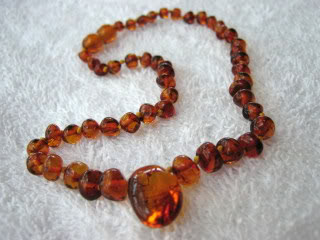
After my sinus surgery I was told I would have swelling and possible headaches for the next month. I wasn’t too happy about that and the need to take medicine every day, so I started to do some research. I came across a site that promoted Baltic Amber and I knew Franklin Goose carried a brand called Inspired By Finn. So I contacted them to do a review and I am so glad that I did!
Baltic Amber is a natural pain reliever and anti-inflammatory agent. When amber is worn on the skin, the warmth of the skin releases trace amounts of healing oils. These oils contain succinic acid which is what acts as the pain reliever. Succinic acid restores oxygen and energy supply to depleted cells and helps the body return to a normal, functioning state.

A week after I was wearing my Inspired By Finn necklace the swelling and pain were gone. And no head aches! Granted, it had been 2 weeks after surgery. But still, it did the trick. I was told I’d have 2 more weeks of pain, so I know it worked.
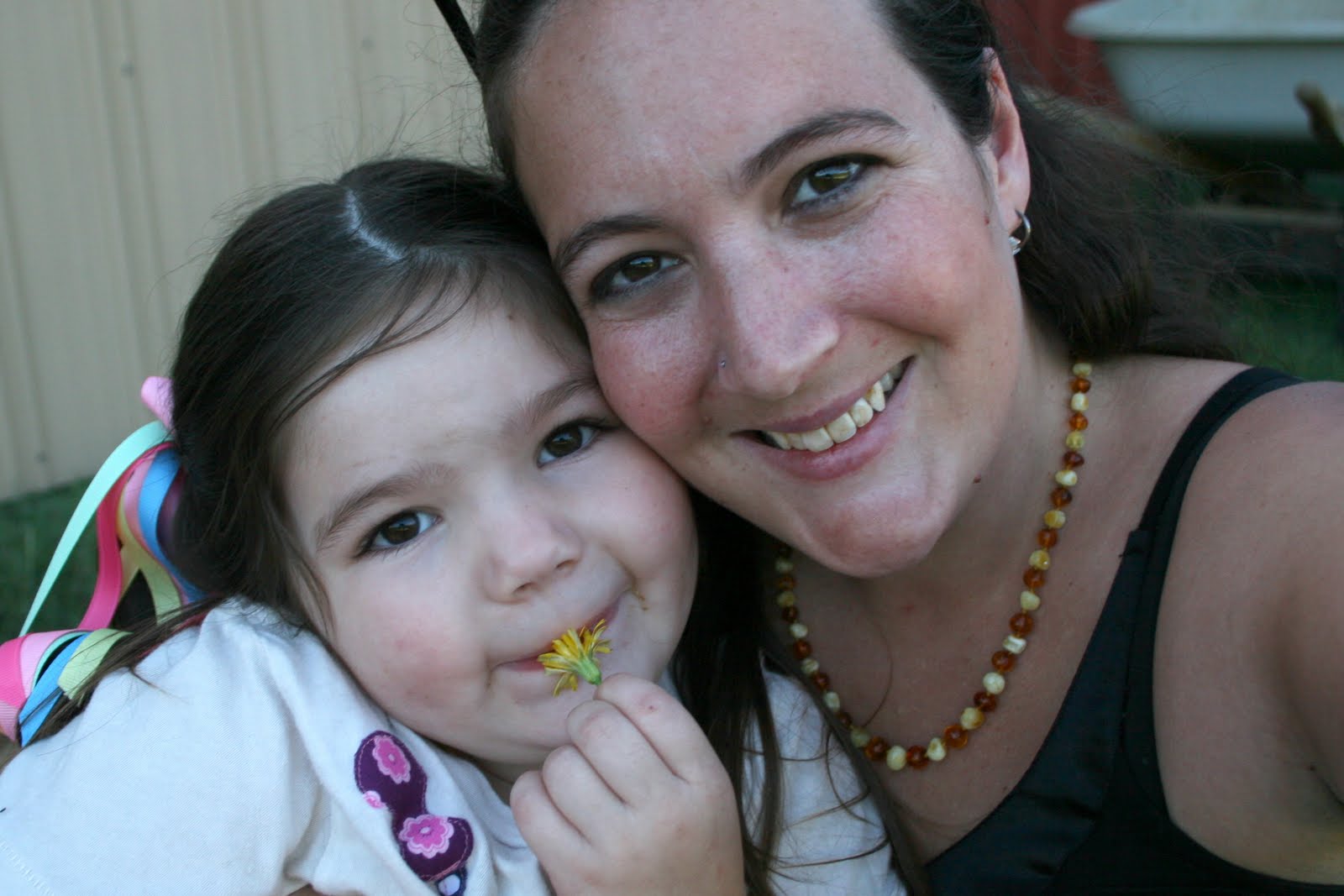
I also got Ella a necklace because baltic amber is known to strengthen your immune system, restore energy, maintain wellness, and break the cycle of inflammation. Though, it doesn’t help with MRSA. 😉Many parents use the amber necklaces or bracelets for teething jewelry. I have a few friends that swear by it. Inspired By Finn has Baltic amber necklaces, bracelets, anklets, and earrings for both children and adults. They also have single strands that can be used for back pain.

Not only does Inspired By Finn jewelry help your body but they are stylish too! We only take ours off when we get into the shower. The necklaces are light weight, so you can’t tell that you are even wearing them. They also have a screw clasp or magnetic clasp if you are worried about your little one wearing a necklace. You can choose different lengths, though I like ours a little more snug. I have made one of the necklaces a bracelet. And Ella now has 2 bracelets. I want to order another one because it has really helped my carpal tunnel.

Deal: TO SAVE 20% on an order with Inspired By Finn, join them by clicking the “Like” button toward the top of their “Wall” tab on Facebook.

TO SAVE 25%, join IBF by clicking the “Like” button + use the “Suggest to Friends” link near the top left of this “Wall” tab to suggest this page to your Facebook friends.

The discount code is entered/applied during checkout, and the discount is given off of prices on their website – www.InspiredByFinn.com

The codes to use once you have completed the criteria above –

To save 20%: FB20
To save 25%: FB25

Giveaway: One winner can select anything 16 inches or SMALLER that is in stock!!
Rules: You have until 11:59 p.m. EST November 10, 2010 to enter. The winner will be chosen by random.org and announced after they respond to the winning email. The winner has 48 hours to respond to the winning email, or a new winner will be chosen. You must leave your email address! This contest is open to the US

How to Enter: Tell me what you’d pick if you won!

EXTRA entries: You must complete the “How To Enter” before making any extra entries. Make sure you leave a comment for each extra entry and tell me which one.

2. Become a fan of Mkokopelli on FB, Follow Mkokopelli on Twitter, or Follow my blog (2 entries for each one)
3. Subscribe to my blog by email (on the right sidebar) You must verify and be active at the time of the giveaway- those who are unverified will become disqualified (3 entries)
4. Blog, Tweet or send a message on FB and leave a link here (1 entry per day)
5. Enter another giveaway I have going on and tell me which one or leave a comment on a non-giveaway post (1 entry for each 1)
6. “Like” Inspired By Finn on Facebook
7. Sign up for the Inspired By Finn Email Updates
8. Tell me what you need the baltic amber for
9. Tell me something else you learned about Inspired By Finn
10. Make a purchase at Inspired By Finn between 10/19-11/15 and tell me what you ordered.
11. Leave a comment on the Inspired By Finn Facebook page that Mkokopelli sent you

Disclaimer: This is my opinion and my results. I was given a necklace to review by Inspired By Finn, though I purchased lots of other items.

Yo Gabba Gabba AWESOME!

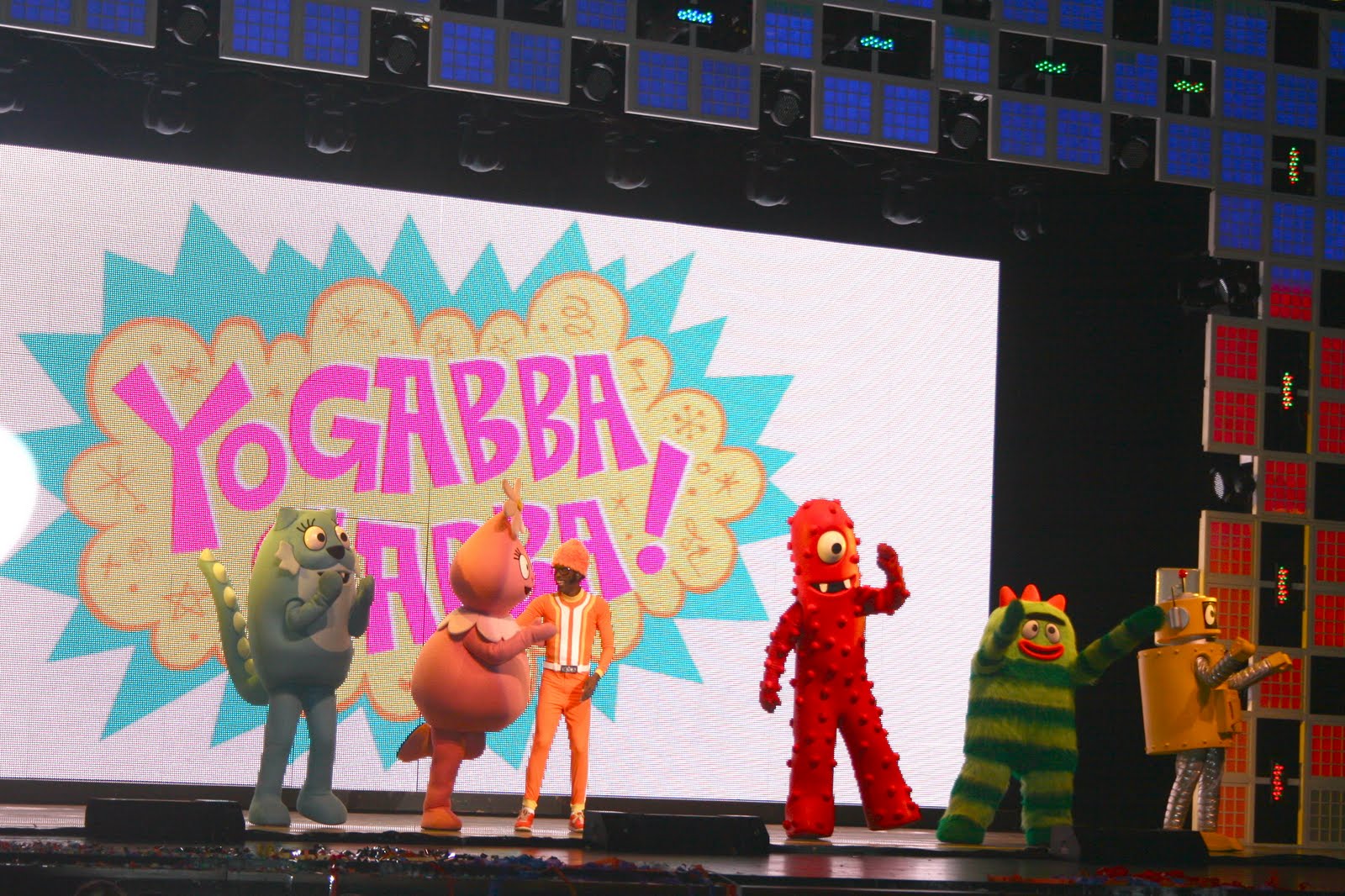
Yesterday we went to Yo Gabba Gabba Live in Charlotte and I have to say I think my mom and I enjoyed it as much as Ella! It was non-stop fun from the beginning to the end. I wasn’t sure what to expect from the tour. I didn’t know if it would be like the TV show or something totally different. But it was beyond my expectations!

I didn’t allow Ella to watch Nick Jr. until this year. But so many of her friends watched it, I finally caved in. I will admit the first couple of Yo Gabba Gabba episodes weirded me out. When my mom watched them with Ella she thought it was crazy as well. But then we both started to pay attention to what Ella was gaining from the show. Ella was sharing with her friends more. She would sing songs from the show at the right time. Like, “inside voice, quiet” or “try it, you’ll like it.” So, the show kind of grew on us.

If the tour is coming to your town, I highly suggest going. It was interactive with dancing, singing, and just being silly. It was wholesome fun without any negativity which I loved. They sang songs that the kids knew from previous episodes. We did dancey dances from our seats and even Leslie Hall performed. Of course it wouldn’t be complete without Biz Markie doing Biz’s beat of the day. He had all of the kids come to the stage to make beats. It was adorable! I loved the lights, the huge video displays, bubbles, confetti, and even hundreds of balloons that fell from the sky! I would compare this show to the Vegas version of the Blue Man Group. Yes, it was that good.

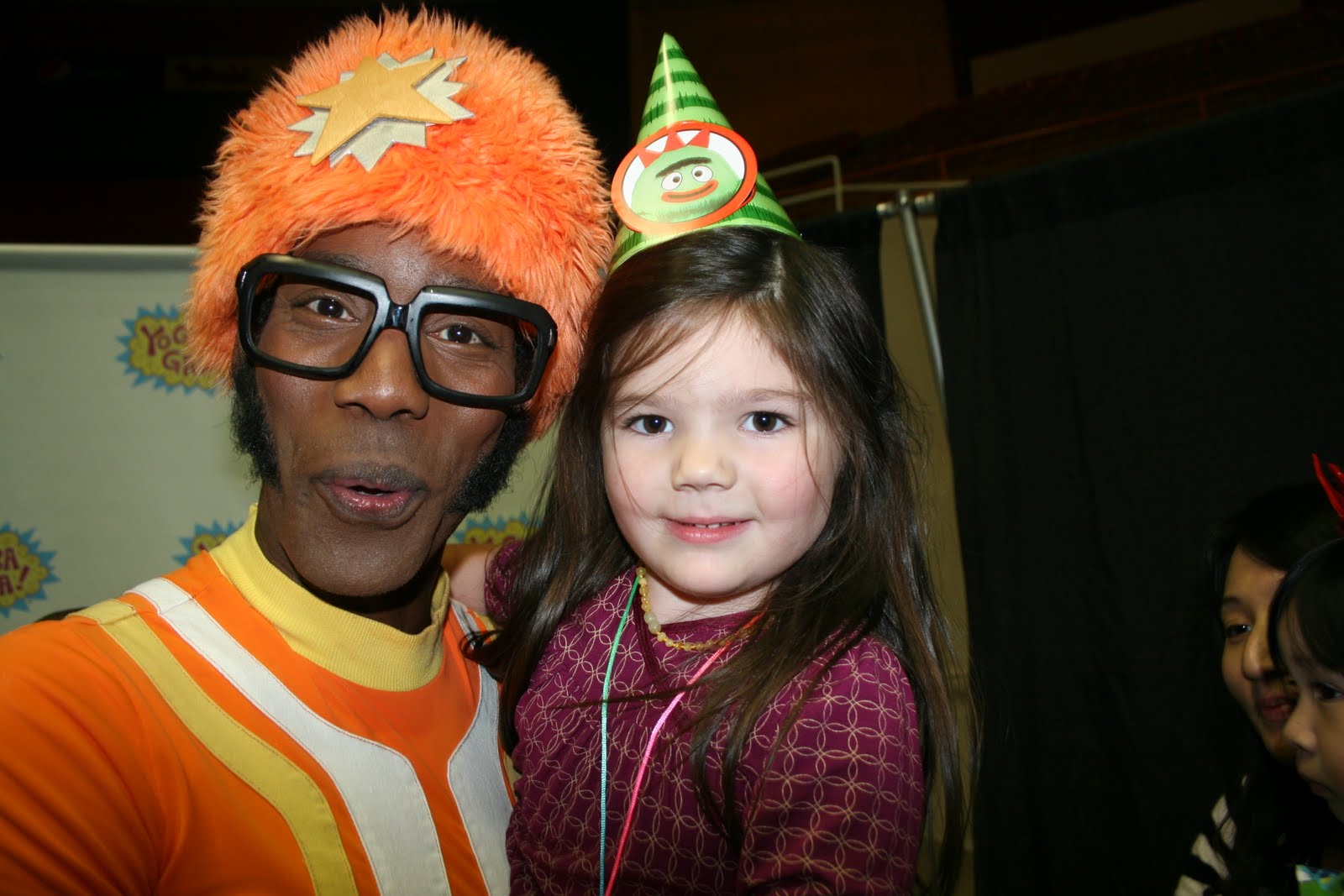
We got to go to the VIP party afterwards and again, I highly recommend getting this package! The food spread was amazing with organic Plum fruit smashes and Revolution Foods. Not to mention tons of fruit, sandwiches, cheeses, and more. The tables had coloring pages and birthday hats. Leslie Hall came out to dance with the kids. Ella gave her a silly band and made her day. Then DJ Lance came out to read the kids a story. He was rushed for time, but still was able to hug many kids. He even came back out because one little girl didn’t get to say hi and was hysterically crying. That really touched me that he cared for his little fans that much! Then Biz came out to beat box with the kids. Ella gave him and DJ Lance a silly band as well. We finally got to meet the rest of the Yo Gabba Gabba team and Ella was a bit scared. But, she finally warmed up as we were walking away and there were no cameras. Yo Gabba Gabba Live was an amazing show! If it’s coming to your town, be sure to catch it! Here is a list of the upcoming shows:

Wednesday, October 20
Huntsville, AL — Von Braun Center Concert Hall
More Info & Get Tickets

Thursday, October 21
Nashville, TN — Tennessee Performing Arts Center – Jackson Hall
More Info & Get Tickets

Saturday, October 23 – Sunday, October 24
Atlanta, GA — Fox Theatre
More Info & Get Tickets

Wednesday, October 27
Jacksonville, FL — Times Union Center for the Performing Arts
More Info & Get Tickets

Friday, October 29
Kissimmee, FL — Silver Spurs Arena at Osceola Heritage Park
More Info & Get Tickets

Saturday, October 30
Tampa, FL — St. Pete Times Forum
More Info & Get Tickets

Sunday, October 31
Miami, FL — AmericanAirlines Arena
More Info & Get Tickets

Tuesday, November 2
Columbia, SC — The Township Auditorium
More Info & Get Tickets

Wednesday, November 3
Knoxville, TN — The Historic Tennessee Theatre
More Info & Get Tickets

Friday, November 5
Tulsa, OK — BOK Center
More Info & Get Tickets

Saturday, November 6
Kansas City, MO — The Midland by AMC
More Info & Get Tickets

Sunday, November 7
Broomfield, CO — 1st Bank Center
More Info & Get Tickets

Tuesday, November 9
West Valley City, UT — Maverik Center
More Info & Get Tickets

Friday, November 12
Spokane, WA — INB Performing Arts Center
More Info & Get Tickets

Saturday, November 13
Tacoma, WA — Tacoma Dome
More Info & Get Tickets

Sunday, November 14
Portland, OR — Memorial Coliseum
More Info & Get Tickets

Monday, November 15
Eugene, OR — Hult Center for the Performing Arts
More Info & Get Tickets

Thursday, November 18
Sacramento, CA — Memorial Auditorium
More Info & Get Tickets

Saturday, November 20 – Sunday, November 21
San Francisco, CA — Bill Graham Civic Auditorium
More Info & Get Tickets

Tuesday, November 23
Fresno, CA — Save Mart Center at Fresno State
More Info & Get Tickets

Friday, November 26 – Saturday, November 27
Los Angeles, CA — NOKIA Theatre L.A. Live
More Info & Get Tickets

Sunday, November 28
San Diego, CA — San Diego Sports Arena
More Info & Get Tickets

Tuesday, November 30
Bakersfield, CA — Rabobank Theater
More Info & Get Tickets

Thursday, December 2
Las Vegas, NV — Orleans Arena
More Info & Get Tickets

Saturday, December 4 – Sunday, December 5
Phoenix, AZ — Comerica Theatre (formerly Dodge Theatre)
More Info & Get Tickets

Tuesday, December 7
El Paso, TX — Abraham Chavez Theatre
More Info & Get Tickets

Thursday, December 9
San Antonio, TX — Freeman Coliseum
More Info & Get Tickets

Friday, December 10
Houston, TX — Hobby Center for the Performing Arts
More Info & Get Tickets

Saturday, December 11
Cedar Park, TX — Cedar Park Center
More Info & Get Tickets

Sunday, December 12
Frisco, TX — Dr Pepper Arena
More Info & Get Tickets

Attachment Parenting- boba carrier

October is Attachment Parenting Month and I want to celebrate baby wearing. 🙂 I have always followed my instinct when it comes to parenting. It just so happens the first years of Ella’s life resembled Attachment Parenting more than any other method.

When Ella was born I stayed up for over 48 hours just watching her. The nurses came in and begged to take her so I could get some sleep and I refused. I just couldn’t stop watching her and wanted to bond. When we got home she was always sleeping on me or next to me. I would wear her in her wrap around the house as I got things done and we had an instant bond. I’ve heard tons of moms say it took months to bond with their babies and I’ve always suggested baby wearing.

I started taking Ella out of the house when she was a week old because I felt comfortable knowing she was protected in her wrap. No one could cough or sneeze on her and she was held warmly against my body. I was also able to breast feed in public more discreetly. I carried her in a wrap until she hit the weight limit at 35 pounds. Then I was super bummed I could no longer wear her around. I hated putting her in a stroller. So I ditched it when she was 2 and made her walk or I would carry her- which was hard on my back.

I was beyond thrilled when I found out the Kozy Carrier/wrap held unlimited weight. So I got one early this year. The carrier was great for 30 minutes, but then it started to cut into my shoulders and I had to put Ella down. The carrier is canvas and Ella is also 42 pounds, so it’s not a bad carrier. My child is just big. 🙂
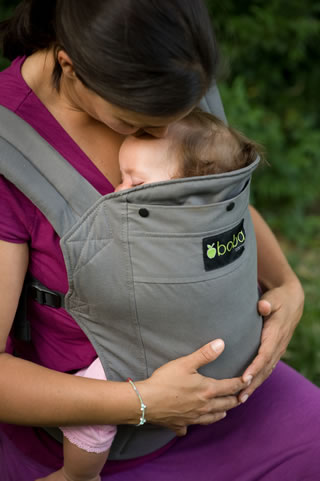
Then I found the makers of Sleepy Wrap made a new carrier for older children called the boba. The boba carrier can hold a child 15-45 pounds. One size fits most adults. The classic collection is made with 100% natural brushed cotton and the Organic is 100% organic cotton. The shoulder straps have extra foam. They come with removable foot straps for the younger child. Also, it has a removable hood.

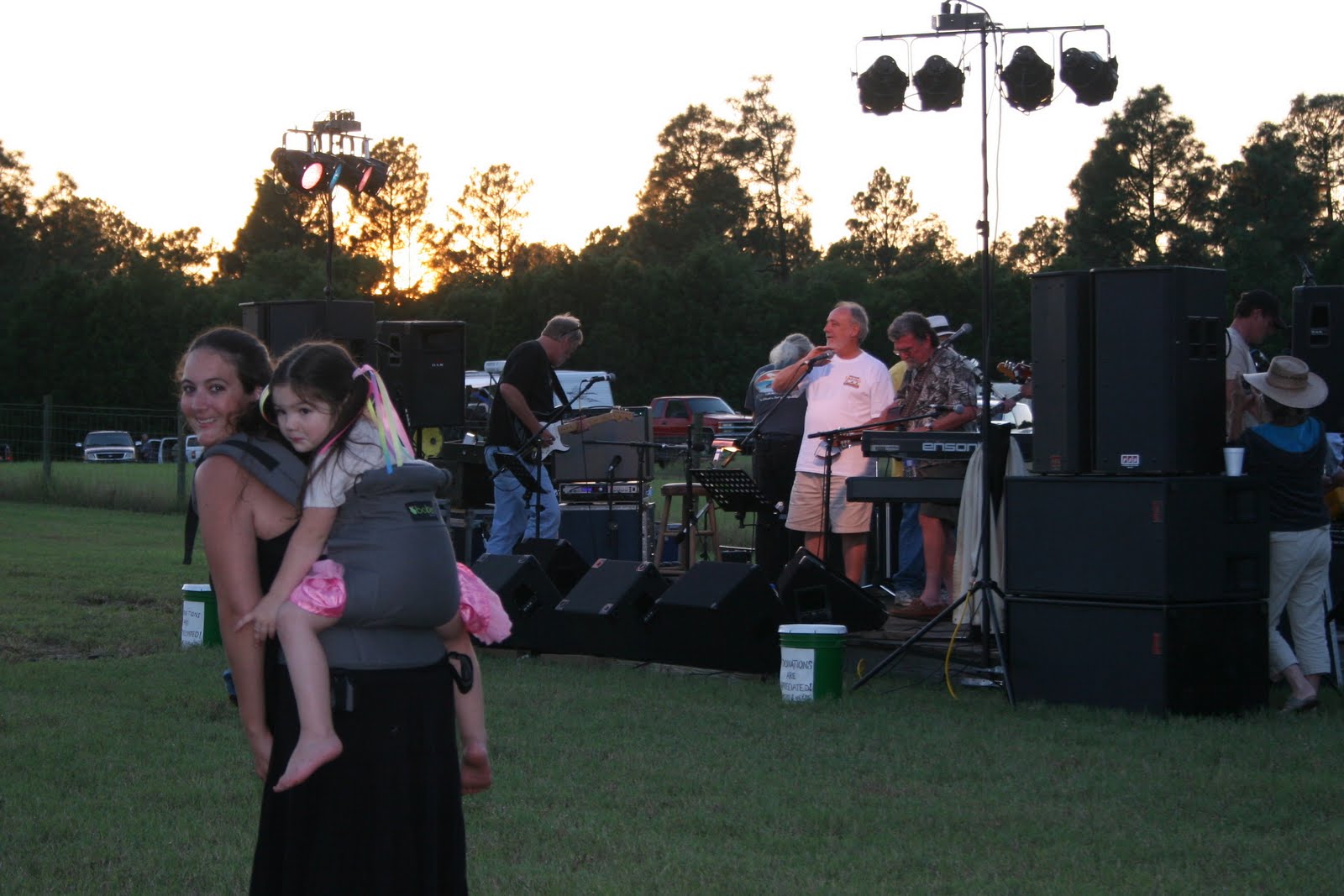
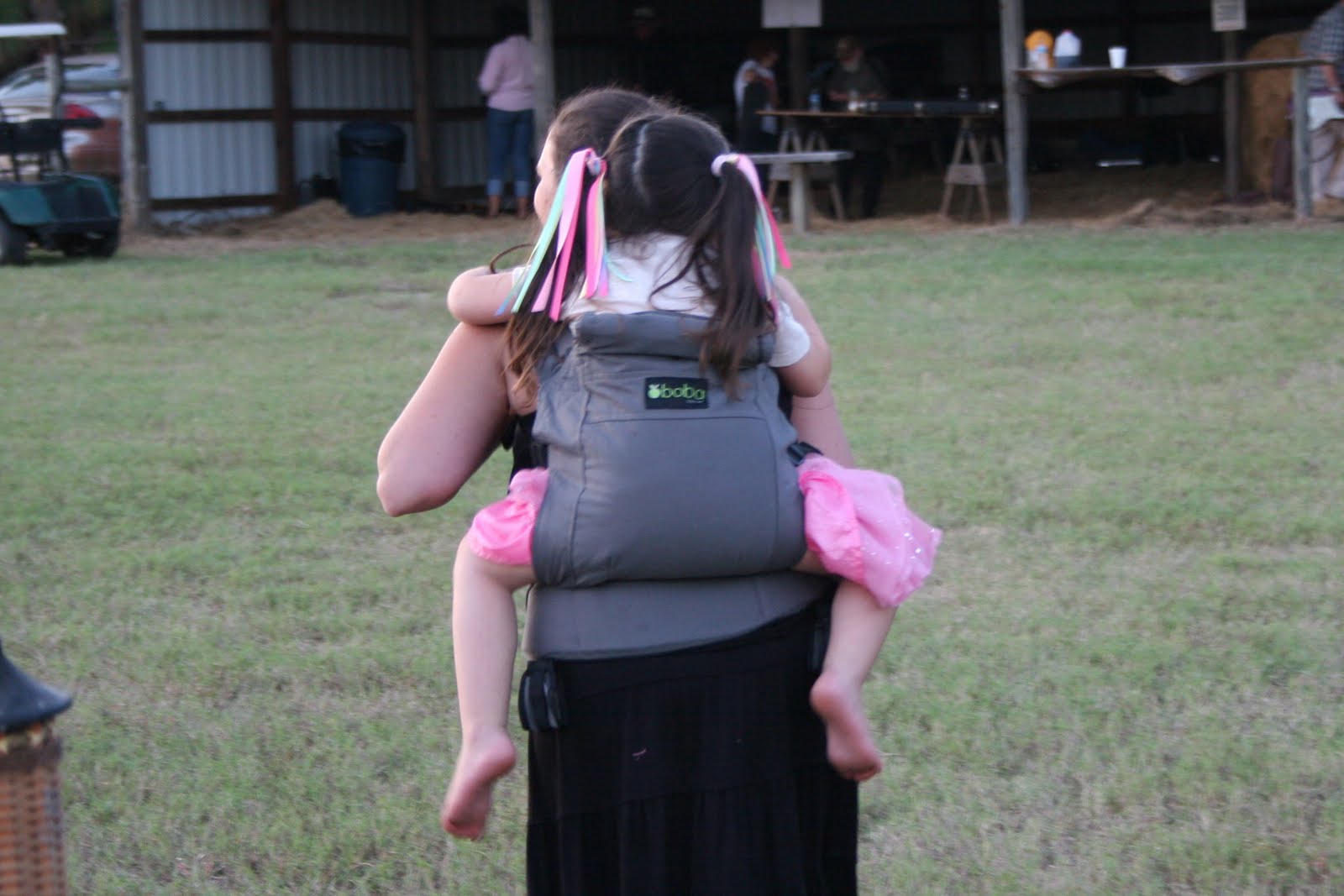
I just got the new classic boba and I love it! We were supposed to go to the Franklin Goose store opening and I was going to tote Ella around in it all day, but her granddad and dad were playing their last music fest and we couldn’t miss that. So I brought my boba to make sure I could take pictures of them playing while keeping up with the little one. The boba was perfect for running around and dancing. It didn’t put extra pressure on my back and didn’t cut into my shoulders. It was easy to get Ella on my back by myself and easy to get her down.
I got the classic carrier which is non-organic and I can’t tell the difference. There are no chemical smells on the fabric and is was super soft. I love the Twilight color and design. I am highly satisfied in the carrier!

You can find the organic boba’s at Franklin Goose or the classic boba on their website!


Yo Gabba Gabba in Charlotte, NC


YO GABBA GABBA! LIVE!: THERE’S A PARTY IN MY CITY! NORTH AMERICAN TOUR WILL STOP IN CHARLOTTE ON OCTOBER 17 FOR SINGING & DANCING
AND TO SUPPORT THE LOCAL HABITAT FOR HUMANITY AFFILIATE

$1 From Every Ticket Sold To Benefit Habitat for Humanity Affiliate In Charlotte
What: Yo Gabba Gabba! There’s A Party in My City
When: Sunday, October 17. Shows at 2 and 5 p.m.
Where: Ovens Auditorium
How: Tickets are $39 and $29, plus applicable service fees at all Ticketmaster Locations, The Cricket Arena/Ovens Auditorium Ticket Office, by phone at 704-335-3100, or online at http://www.ticketmaster.com.

Children under one year of age will be admitted free to sit on a parent’s lap.

The state-of-the-art production features music, singing, dancing and animation. The show is an interactive experience that offers audience members of all ages the opportunity to witness their favorite characters come to life. Joining the characters on stage will be hip-hop legend Biz Markie to teach kids how to beat box with “Biz’s Beat of the Day”. Special guests will join the party on stage for the Super Music Friends Show and Dancey Dance segments. YO GABBA GABBA! LIVE!: THERE’S A PARTY IN MY CITY! is produced by S2BN Entertainment in association with W!ldbrain Entertainment and The Magic Store and promoted by AC Entertainment.

Cool Tricks contest which provides an opportunity for fans across North America to show-off their unique talents. Gabba fans are invited to upload a :30-:60 second video demonstrating their Cool Trick to win the opportunity to receive a VIP Family 4 Pack and have their winning video played during intermission at the KIA Motors Presents YO GABBA GABBA! LIVE!: THERE’S A PARTY IN MY CITY! show closest to their hometown. All participants are also automatically entered into a sweepstakes where one lucky fan will receive a five night trip for four to the Caribbean or Mexico.
In addition, each winner will also receive $100 worth of organic baby food, toddler, and lunchbox snacks and two “Party In My Lunchbox” Yo Gabba Gabba! Live! concert t-shirts from Revolution Foods and Plum Organics. Grand prize includes roundtrip air, Junior Suite accommodations, and all meals to a choice of Palladium Hotels & Resorts.
To enter the contest, participants must upload their video to Facebook at http://facebook.yogabbagabbalive.com. Winners are determined by public vote in each tour market. So be sure to get all your friends and family to vote for you!
Cool Tricks begins on Wednesday, August 18 at 10AM EST and winners will be notified and announced prior to the show date in each local market. The entry period for the grand prize sweepstakes will end on Sunday, Dec 12. See official rules at http://facebook.yogabbagabbalive.com.

Want to win tickets?? Tell me what is you or your child’s cool trick for a chance to win 4 tickets to the 5 p.m. show on Oct. 17! You can also enter at MomsCharlotte.com Giveaway ends Oct. 9. I will combine entries from both site to pick the winner through random.org

EXTRA entries: You must complete the “How To Enter” before making any extra entries. Make sure you leave a comment for each extra entry and tell me which one.
2. Become a fan of Mkokopelli on FB, Follow Mkokopelli on Twitter, or Follow my blog (2 entries for each one)
3. Subscribe to my blog by email (on the right sidebar) You must verify and be active at the time of the giveaway- those who are unverified will become disqualified (2 entries)
4. Blog, Tweet or send a message on FB and leave a link here (1 entry per day)

5. “Like” Yo Gabba Gabba on Facebook
6. Enter the Cool Tricks Contest (5 entries)
7. Sign up for the Yo Gabba Gabba newsletter

Innovative Kids

So we’ve been traveling A LOT over the past 2 months. I am one of those over packers that takes the whole house with me. Ella is a very “out there” child and if she’s not distracted then she’s getting into trouble. So I tend to bring more toys than often needed. When I heard about innovativeKids green start products, I got really excited to try something new.

innovativeKids creates award winning books that are fun, creative, and engaging. They are out of the box books that inspire children with their hands-on reading. innovativeKids not only makes amazing books, they have puzzles, games, toys, and more. They also have an amazing Reading program which I’m going to start Ella on very soon.

What I love about the green start line is that it teaches the basics about loving the earth. It’s very subtle and is enjoyable for everyone. This is a blurb from their press release: “Designed for ages 18 months to 6 years old, the green start™ series is designed to help give very young children an awareness of the natural world and an understanding of how people are interconnected with everything around them. innovativeKids believes that by giving preschoolers a green start, it will be that much easier for them to incorporate environmentally friendly practices into their everyday lives as they grow.”

We got to try out a little of something from the whole line. First, I have to say that the packaging is AMAZING! It’s all made out of 98% post consumer recycled materials that is exceptionally durable. I love being able to take a box on the go and not have to worry about the box folding in and everything spilling out. Majority of the green start products are made out of the same 98% post consumer recycled material and printed with soy based inks. This gives the products a more natural feel- plus I love how vibrant the soy ink pops out on the cardboard.

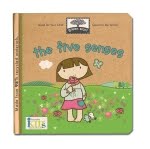
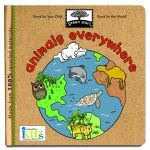
We received “the five sensesand “animals everywhere” books. They both retail for $6.99 and are recommended for children ages 2+. The eco-friendly inks have a glitter to them that I love. The designs are very natural and they have a nice diversity of the characters. The books are great for beginning readers. I love the short rhymes and educational content. I love that children are learning without knowing they are learning. It makes bedtime stories even more fun.

Ella loved the whole line of storybook and plush box sets. You can get the little gorilla, little elephant, little polar bear, and little panda. She loved the mini animals so much that she found “mama” animals for them. So keeping the animals with the books have been a task. Though, when we read at night she matches them to the books. The books are smaller than your palm. These are great to take on the go to pull out when waiting in line, at the dr.’s, and even if you are staying the night out. Each mini book tells you about the animal and their habitat. Each storybook and plush are $9.99 and are recommended for children ages 3+. These would make great stocking stuffers!

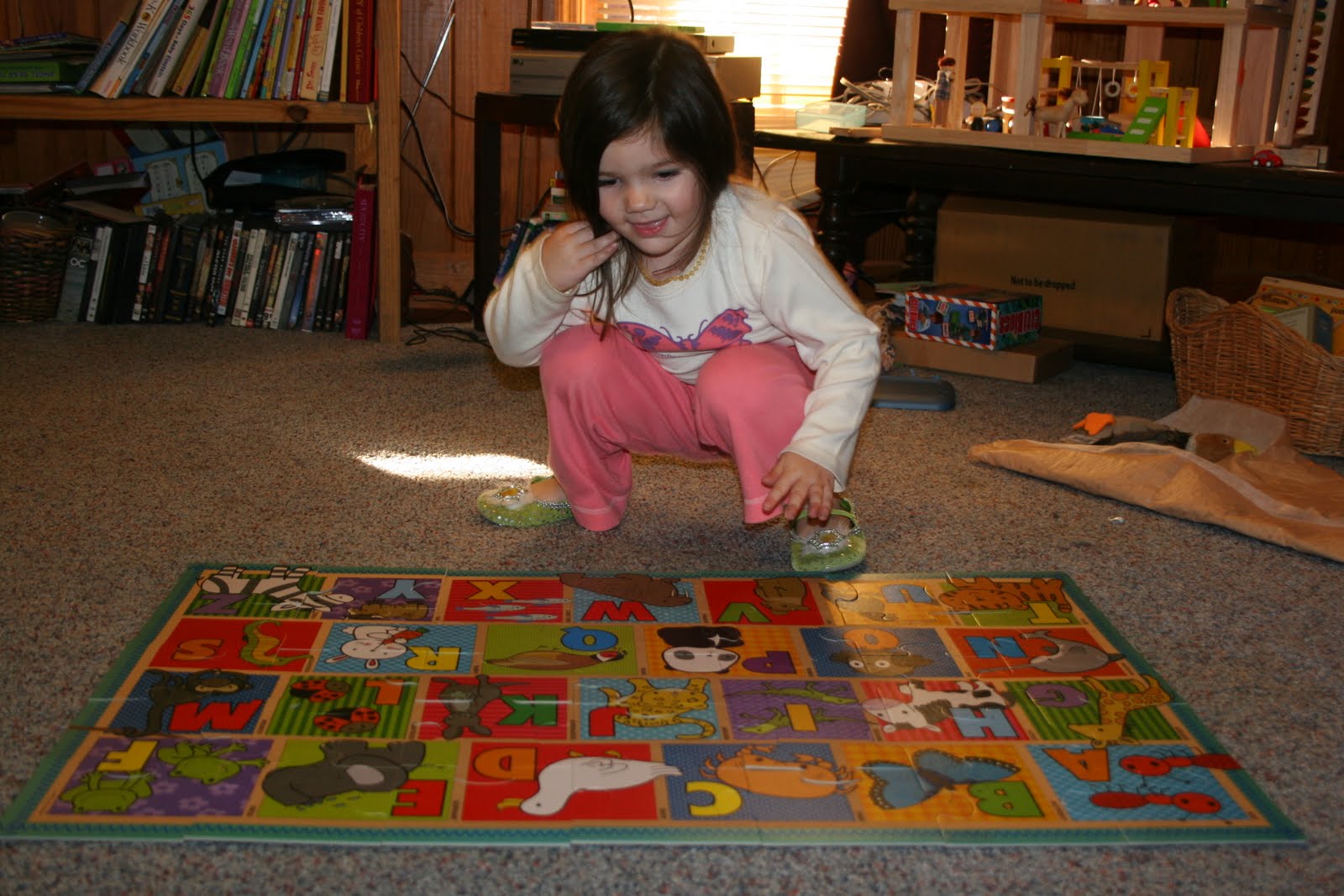
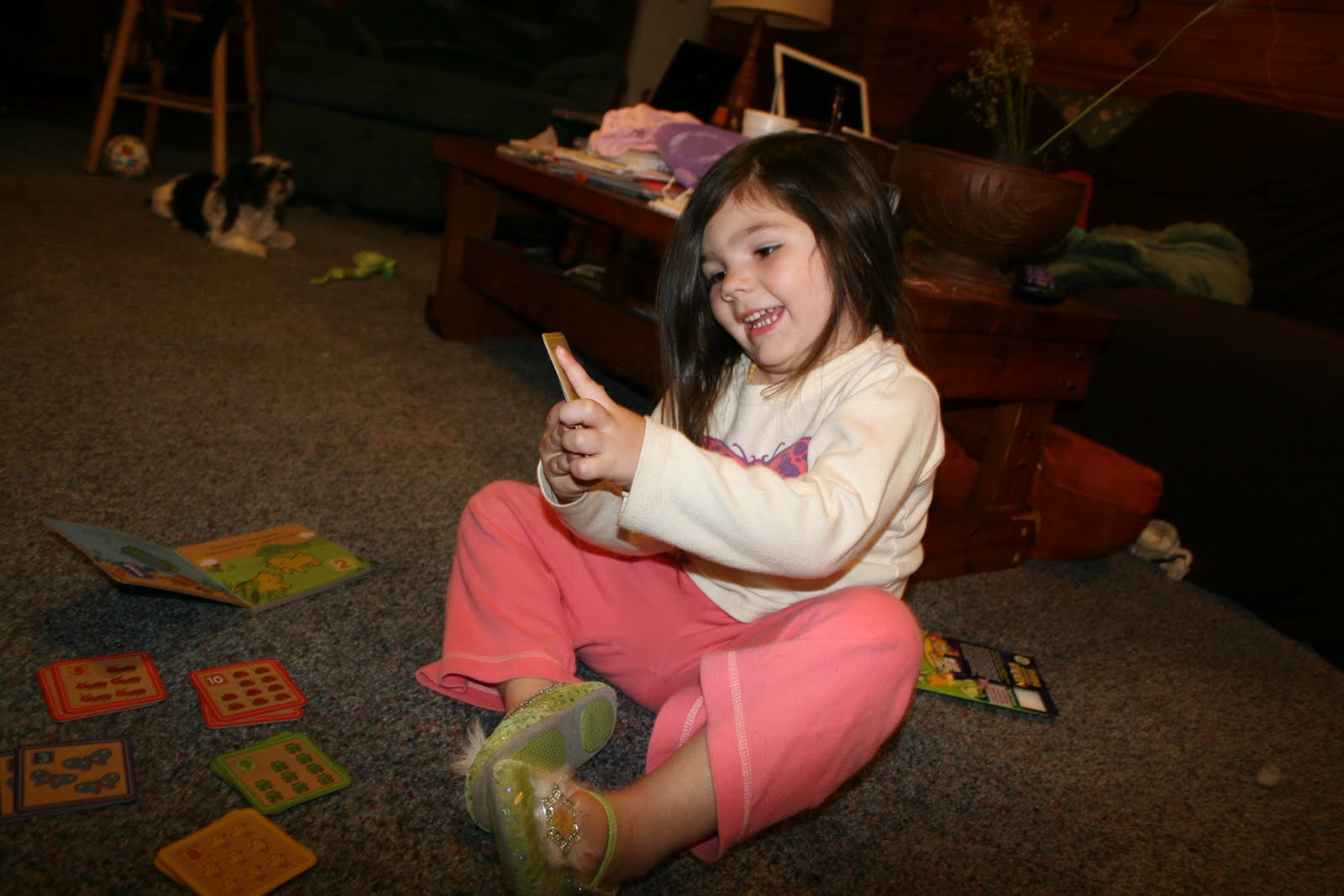
The giant ABC floor puzzle and the book and game set: numbers in nature have been life savers on many occasions. Especially when we were trying to help set up Franklin Goose. They both come in sturdy boxes with handles. They are durable and sturdy, so perfect for rough preschoolers. Ella has pretty much mastered the ABC floor puzzle and it takes her about 20-30 minutes to put it together. Which is perfect while I’m working! The numbers in nature book and game set also keep her occupied for a half hour. She matches the cards to the book and then turns the cards upside down to play the matching game.

We also got to try the wooden butterfly puzzle. It says it is recommended for ages 3+ but I think younger children can get this one. Especially since both sides of the butterfly match. Ella can put it together in about 3-5 minutes. So it’s not as challenging as the floor puzzle. It retails for $9.99.

Be sure to check out all of innovativeKids green start line! They also have some really cool tips and activities. I can’t wait to try more. Plus everything is under $15- which make great gifts.

*These are my personal thoughts and opinions. I was sent these products to review from innovativeKids.

Little Twig

By the way… I won the Little Twig inspiration contest!!! Congrats to Tree for being the random winner! Your prize will be on its way next week. I forgot it at the old house. Thanks for everyone’s support. 🙂